CNC Routing vs Laser Cutting for Custom Acrylic Sheets
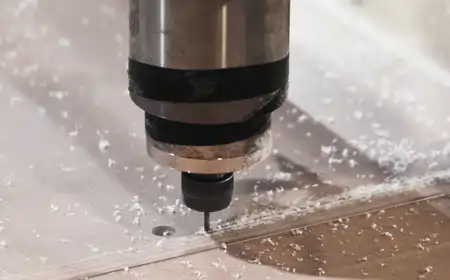
When a fabricator needs a clean plastic sheet cut to spec, the two most common processes are CNC routing and laser cutting. Both are computer-controlled and capable of holding tight tolerances, but they work differently, and those differences matter depending on what material you are cutting, how thick it is, and what the sheet will be used for.
How Each Process Works
A CNC router uses a rotating carbide or high-speed steel bit to mechanically remove material. The spindle moves along a programmed toolpath, physically shearing the plastic away from the sheet. Friction generates some heat at the cutting edge, but the bulk of the material stays near ambient temperature. Chips are evacuated by the bit geometry and vacuum extraction, leaving a matte, machined finish.
Laser cutting takes the opposite approach. A focused beam, typically a CO2 laser for non-metals, is directed at the material surface with enough energy to vaporize or melt a narrow channel. The kerf is tight, often under 0.5 mm, which suits fine detail work on thin sheet materials. No physical contact between tool and workpiece means no tool wear in the conventional sense.
Thermal Stress and the Problem of Crazing
Laser cutting's concentrated heat is where problems emerge with many plastics. The beam deposits energy along a narrow cut line, creating a heat-affected zone in the material immediately adjacent to the edge. In acrylic (PMMA), this usually produces the flame-polished, glossy edge that laser cutting is known for, but residual thermal stress remains built into the material. That stress is not always visible immediately. When the sheet is later exposed to solvents, certain adhesives, or sustained mechanical load, it can trigger crazing — a network of fine surface micro-cracks that clouds the edge zone and reduces structural integrity.
The Problem with Laser Cutting
A major down side to laser cutting is that the process generates toxic fumes including VOCs, carbon monoxide, and, in some plastics, carcinogens like hydrogen cyanide. A high quality extraction system and proper PPE is essential due to the potential long-term health risks.
Where CNC Routing Has the Advantage
Because CNC routing is mechanical rather than thermal, it does not introduce a heat-affected zone. Material properties right up to the cut line remain the same as the rest of the sheet. This makes it the right choice for acrylic, polycarbonate, HDPE, PVC sheet, and any application where edge integrity is critical: sheets that will be bent near the cut line, drilled, bonded with solvent cement, or placed under sustained load.
Thickness is the other practical factor. Laser cutters perform well on thin materials, but as stock thickness increases, cut quality tends to drop. Tapered edges, discolouration, and slower speeds become problems. CNC routing handles thicker sections — half-inch, three-quarter-inch, one inch and beyond — without the same degradation in edge quality. Bit geometry and cut parameters can be adjusted for any thickness and material combination.
CNC routing also opens up operations that a laser cannot perform: chamfered profiles, stepped rabbets, dado slots, and engraved recesses. A single setup can combine a profile cut and a surface operation in one pass.
Place Your Order with Plasticuts
We feel CNC routing produces the highest quality results without the negative enviromental impact inherent in laser cutting. That is why Plasticuts uses only CNC routing to cut custom acrylic sheets for both retail and business clients across Canada.
Order custom cut acrylic sheets from Plasticuts 100% online. Most orders ship within 1-2 business days.